

Time to be Mad Again
The 2025-26 English Football League season is underway and I'm as normal about it as ever

I suspect we all have certain expectations where getting old is concerned. Things will start to hurt more, wrinkles will appear, young people will begin to sound like they’re speaking a sort of patois, roughly every other word comprehensible to your calcifying brain. All of these things have happened to me, and I was prepared for them.
I was not, however, prepared to age into an obsession with lower league English soccer.
To be fair, the signs of this started to appear in my mid-20’s. Having secured my “dream job” as a producer at ESPN I began to experience what I think is a not uncommon reaction to careers in sports media, but maybe to a degree that was. After spending the first 22 years of my life obsessing over the sports that occupy the minds of many a young American man and woman, often sick with either joy or grief over the success or failures of my favored baseball, basketball or football teams, I found that my sporting libido fell off a cliff. Every day I showed up for work at 6 PM and my job for the next eight to ten hours was to produce a radio show about whatever was going on in the world of sports. Though I loved the content beyond words when I arrived in Bristol, I eventually came to feel like one of those force fed fois gras geese. “Oh you like that do you?” the world seemed to be saying, “open wide!”
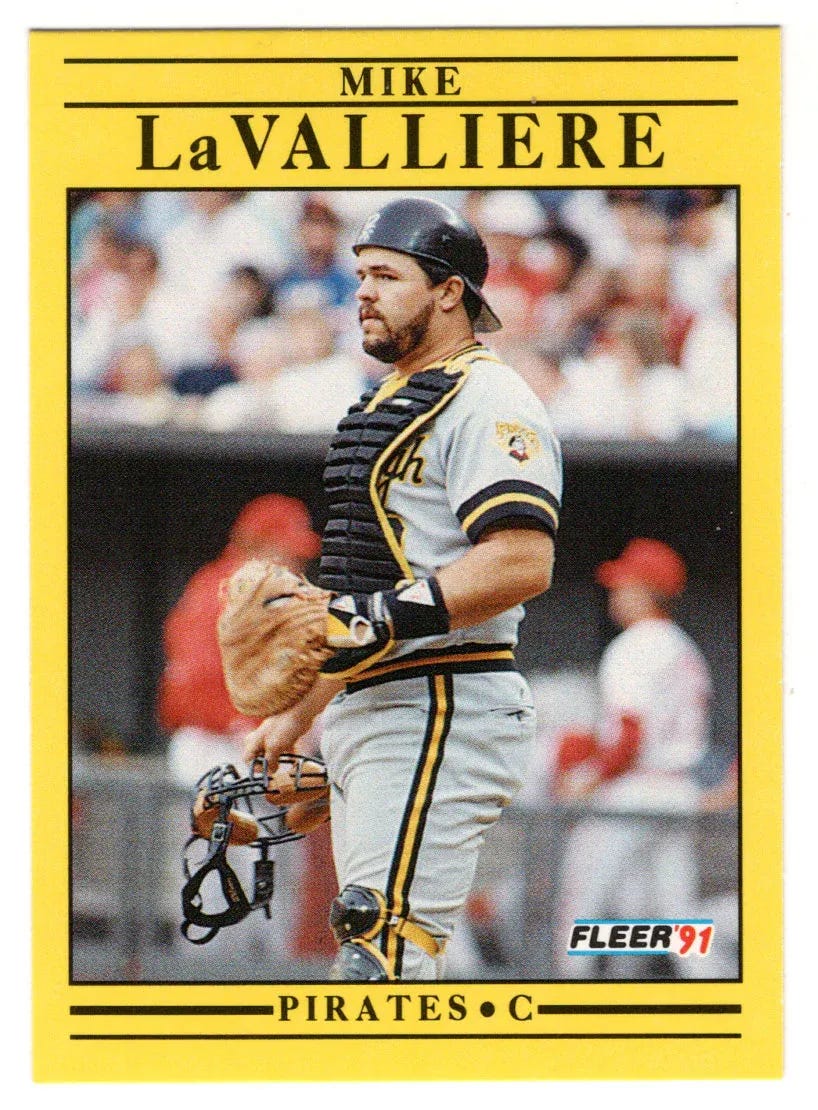
The work of being a sports talk radio producer mostly involved booking guests. This is a crucial aspect of radio production that I always hated, and that eventually drove me away from the medium and into the arms of television (in the intervening 20+ years I have been unable to escape guest booking. I’m a college professor now and I’m still doing it). Most nights I would show up with two or three guests already scheduled, and spend the rest of my evening hoping one of our stringers could get a player on the phone after a game, or calling Pirates catcher Mike LaValliere in his hotel room. When I went home, the last thing I wanted to do was think about Mike LaValliere (now I’m more amenable to it) or about any of the sports that now consumed my professional life. The problem I faced was that the itch in my brain—the one that compelled me to obsesses over wins and losses, names, places and statistics—wasn’t going anywhere, even if the fandom that scratched it had.
Enter football, that’s soccer to you and me.
What originally drew me to the sport was that it was this wildly popular global phenomenon that was in no way a part of my day-to-day at work. When a World Cup came around I might have booked a guest, but if I had completely ignored it nobody would have given me a hard time. I remember very clearly one of our more worldly hosts and I pitching a segment about England hiring Sven-Göran Eriksson—their first ever foreign manager—and being met with blank stares. Nobody cared.
I may have been mildly bemused, but was also aware that this might be a chance for me to reclaim a part of my life, sports fandom, that I had come to experience as an amputee does a missing limb. Could I once again scratch that itch in my brain? Swap a diamond for a pitch? Replace Steve Trachsel with Steve Anthrobus?
At the time, accessing information about European soccer was a challenge, but there was enough on espn.com—standings (they called them “tables” intoxicatingly), rosters and box scores to get me started. And more-so even than American sports what there was to know was practically endless. It wasn’t like there were a fixed number of teams as in an American sports league. In fact the teams (sorry, sides) changed year-on-year. One season Hull City would be there and the next, *poof* they were gone.
Where did they go? To the league below. They had been relegated. And another team, one that had finished near or at the top of that league came up. Below that there were a dozen other leagues! These were not minor leagues mind you. They did develop talent the way minor leagues do, but people actually cared about the teams themselves, and while there wasn’t anything approaching parity across the system, it was technically possible for a team at the very bottom of the pyramid to climb all the way to the tippy top, to the Premier League. I was hooked.
In need of a team to support, and confident in my conviction that access to authentic fandom in this entirely foreign sport was attainable only through suffering (a concept explored beautifully in a recent episode of Phantom Island) I began to comb through these lower leagues looking for a club that met a few basic criteria:
1.) They weren’t good. No way was I gonna rock up to soccer fandom and claim to be a Manchester United or Liverpool fan.
2.) They had some history of modest successes. Not multiple Champions League titles, just proof that if everything broke just right for them they might get a shot at the big time.
3.) They were in London. I wanted a team that was a non-stop flight away. No trains to Cumbria or Devon for me.
After first scouring the internet, I purchased a book produced by the Rough Guide travel people called A Rough Guide to English Football, and read it cover to cover. After some deliberation I finally settled on a medium sized club in West London called Queens Park Rangers.
Aside from their location, they met all the criteria. The R’s, as they are known, had experienced long and excruciating fallow periods punctuated by the occasional success. They won a League Cup in 1967, finished second in the top flight in 1976, and had been founder members of the EPL. At the time I took up their cause they were bouncing between the two leagues just below the Premier League. If they were in the news it was probably for the wrong reason. In 2001 they had been placed in administration. Several years later a director of the club alleged he was threatened at gun point in the boardroom. They were a disaster. In other words, they were perfect.
This rough-around-the-edges quality translated to their fan base. They did not appear to have a particularly active hooligan scene (a point in their favor), but they did count among their number supporters who were famously moody rock-n-roll bad boys. Pete Doherty of the Libertines, Mick Jones from the Clash, the Sex Pistols Glen Matlock and Robert Smith of the Cure are all Rangers fans.
They seemed both appropriately hapless, and alluringly esoteric.

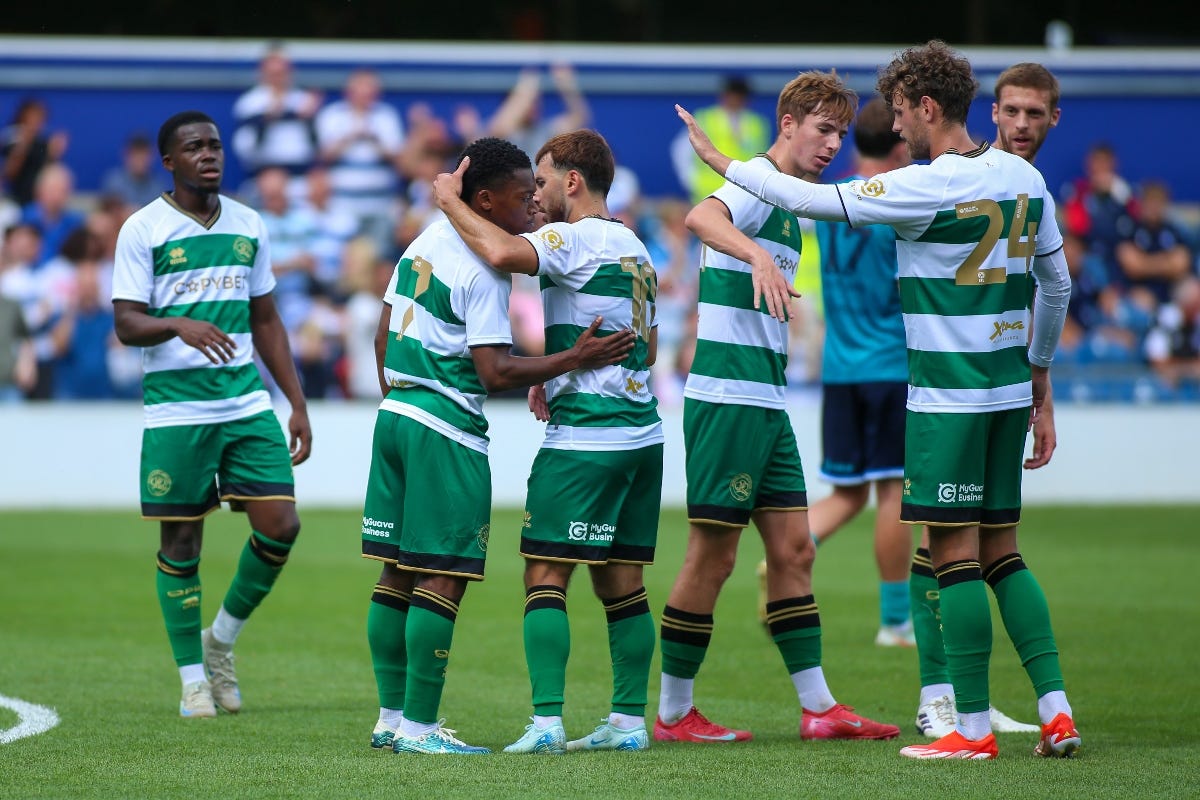
Fast forward 25 years and QPR are now my one and only sporting obsession. As recently as two days ago they ruined an entire day for me by losing in the Carabao Cup (the League Cup, but now sponsored by a Thai energy drink) to Plymouth Argyle who play in the league below. I watched on what the English refer to as a “dodgy stream.” We (yes we) went up 2-0 and lost 3-2. It was infuriating. At one point I stormed out of my house.
When they play poorly (and they often do) I fume the whole day. I am enough in control of my emotions not to just start ranting about our poor finishing or defending of set pieces at birthday parties or school events, but just barely. “Does Bryson like his teacher this year?” a fellow parent will inquire. “Yes, I do think we would be better off re-signing Isaac Hayden now that you mention it,” I'll think to myself before just nodding silently.
Nobody wants to be like this of course, but I realize now it’s not so much a choice I’m making as a reflex. Sometimes I wonder if I didn’t properly appreciate, in those years at ESPN when my professional life crowded out my sporting anxieties, how good I had it.
Nah.
You R’s!!!!!!!